
Windows
Flush casement windows
A flush casement sits level with the outer frame when it is closed, rather than lipping over the front of it, so the whole window reads as one flat plane. It is the closest PVCu (uPVC) gets to the appearance of a traditional timber window.
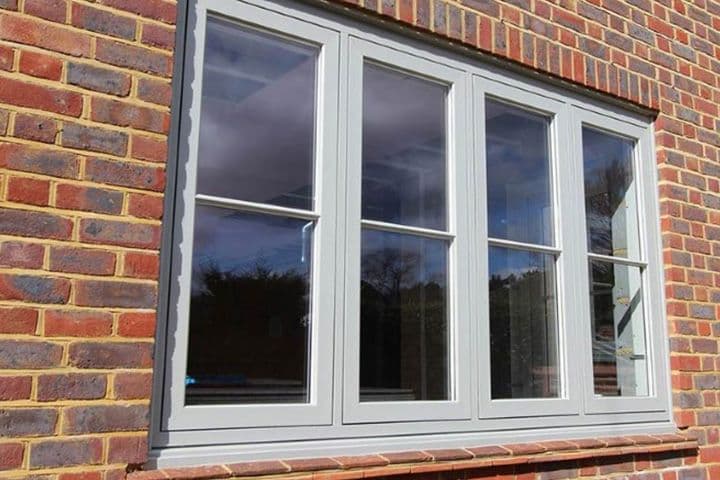
That makes it the usual choice for period properties, and for anywhere in a conservation area where a standard lipped casement would look wrong against old brick or stone. From more than a few feet away most people cannot tell it from painted timber.
What you avoid is the maintenance. No sanding, no filling, no repainting every few years, and no soft spots where water has found its way into the joinery.
What you get as standard
- Symmetrical design giving great curb appeal
- Modern appearance
- Conservation area friendly
- Low maintenance and thermally efficient alternative to timber
Worth knowing
What to think about before you choose
Conservation areas and listed buildings
A conservation area does not by itself stop you replacing windows. A listed building, or an Article 4 direction covering the street, can. It is a five minute call to the council's planning department and worth making before anything is ordered.
The details that carry the look
The flush face is only part of it. Mechanically jointed corners rather than welded ones, a run through horn, and the right shade all do more for the impression at ten paces than the flush profile alone.
Colour inside as well as out
A flush casement is usually specified in a heritage colour outside and white inside, so the room stays light while the elevation reads as timber. Dual colour costs a little more and it is most of the difference between the two effects.
Free, with no obligation
Get an accurate price for your project
Tell us what you are thinking of and we will come out, measure up and give you a detailed quote. No hard sell.
Call the office
Email us
Opening hours
- Monday to Friday9am to 5pm
- SaturdayBy appointment
- SundayClosed