Windows
Windows for older Lincolnshire homes
Published 1 September 2026 by Dawn Radford
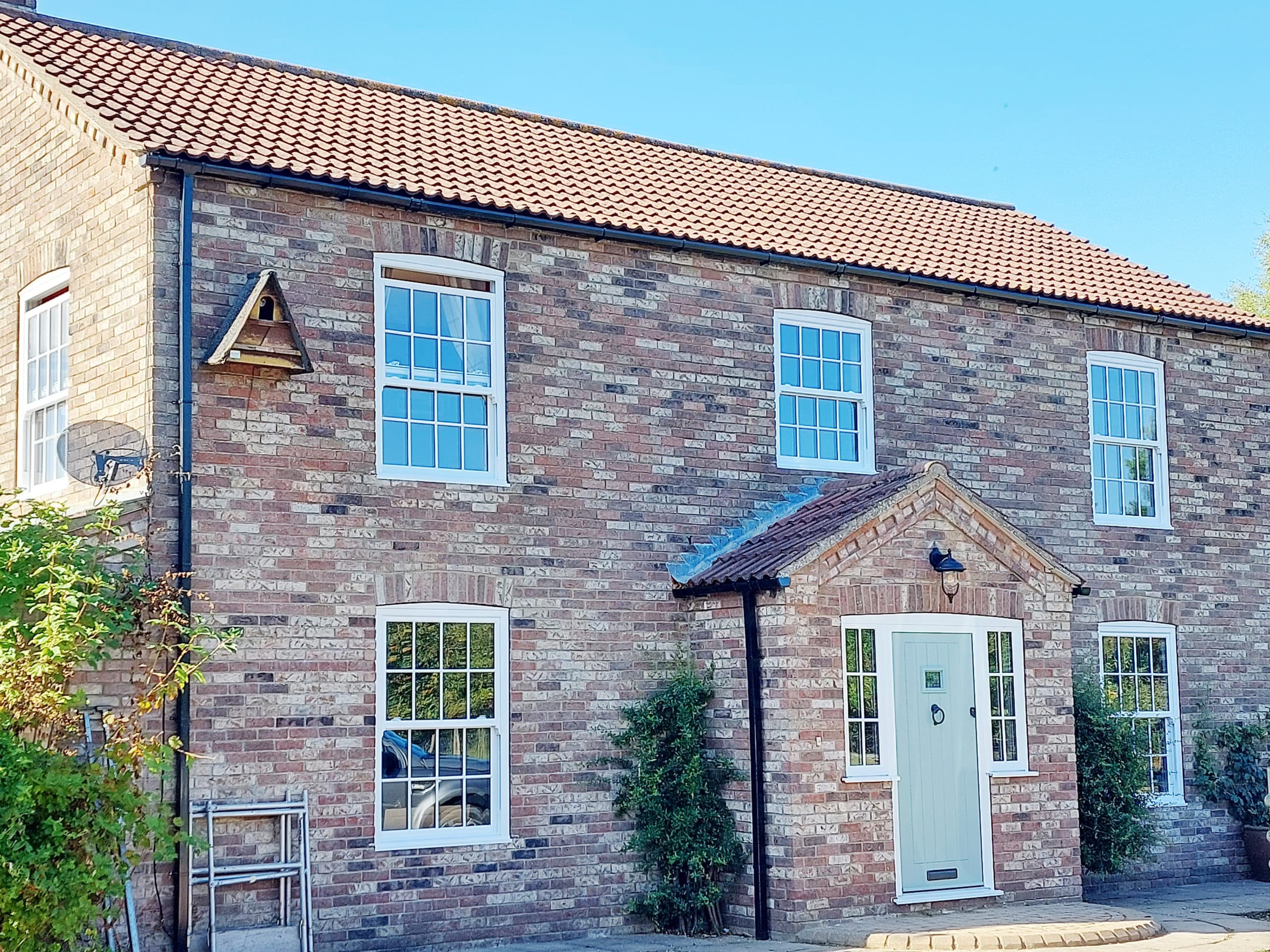
The right window for an older Lincolnshire home is one that keeps the original sightlines, opens the way the house was designed to open, and is made to the actual size of an opening that has almost certainly moved since it was built. For most of the county's older housing that means a flush casement or a sliding sash rather than a standard casement, in a frame slim enough not to swamp an opening that was drawn for timber.
The one thing to settle before anything else is whether the property is listed or sits in a conservation area, because that decides what is permitted rather than what is preferable, and it is checked with the local authority rather than assumed. Everything after that is a question of getting the style, the proportions and the fit right, which is where most replacement windows on period houses go wrong.
What older housing means in this county
Lincolnshire's older stock is not one thing. There are Victorian and Edwardian brick terraces and villas through the market towns, stone and pantile cottages in the villages, rendered seaside houses along the coast, farmhouses that have been extended three times, and a very large number of 1930s bay-fronted semis that are now approaching a century old.
Each of those asks for something slightly different, but the failure mode is the same across all of them. A window is chosen from a brochure on price and glazing performance alone, it goes into an opening it was never drawn for, and the house looks subtly wrong afterwards in a way the owner struggles to name. Almost always what has changed is the sightline, meaning how much frame you see against how much glass, and how the opening part sits against the fixed part.
The flush casement is the one that changes how a period house looks
If you take one practical point from this, take this one. A standard casement window has its opening sash standing slightly proud of the outer frame, which is how most uPVC windows have been made for decades. A flush casement has the sash sitting level with the frame, flat across the whole face, which is exactly how traditional timber joinery was built.
In our experience, a flush casement works better than a standard casement on an older Lincolnshire property because the sash sits level with the frame the way the original timber did, so the window reads as part of the house rather than as a modern unit fitted into an old hole. Photograph the same cottage with each and the difference is immediate, even to somebody who could not tell you what they were looking at.
That is why our flush windows get specified on period work far more often than the price difference alone would explain. For Victorian and Edwardian houses that had vertical sliders originally, sliding sash windows are the honest match, and on the bay-fronted semis a properly proportioned bow or bay keeps the frontage doing what it was designed to do.
Bars, leaded lights and the details that give it away
Georgian bars and leaded lights are where period replacements are most often let down. Bars applied to the surface of the glass as a decorative strip read as applied, particularly at an angle and particularly in low sun, and once you have noticed it on a house you cannot stop noticing it.
The detail worth asking any installer about is how the bars are constructed and how wide they are, because a bar that is too heavy makes a window look like a stick-on grid, and one that is too thin looks like a sticker. Get the width right for the age of the house and the effect is convincing. The same is true of the glazing bead, the sill profile and the depth of the frame, none of which appear on a quotation and all of which decide whether the finished window looks right.
Colour matters as much. Brilliant white is a modern colour, and on a stone cottage or a Victorian villa it can be the single thing that makes a good window look wrong. Cream, heritage greys, greens and woodgrain finishes all sit far more comfortably on older brick and stone, and we hold the full range of colours and finishes in the windows brochures so you can see them against your own house rather than on a screen.
Nothing in an old house is square, and that changes the fitting
This is the part that separates a period installation from a modern one, and it is the part we spend the most time on at survey. An opening in a house that has stood for a hundred and fifty years has settled, and it is rarely square, plumb or the same size top and bottom. Openings in the same elevation of the same house routinely differ by more than people expect.
From more than 40 years of surveying and fitting across Skegness, Winthorpe, Spalding and the villages between, the working rule we use is that every single opening gets measured on its own, because assuming two windows on the same frontage are identical is how you end up trimming a frame on site or packing a gap out of sight. All our windows are made bespoke to the opening for exactly this reason, which matters far more on an old house than a new one.
Older walls behave differently too. Many of these properties are solid brick or stone with no cavity, so there is no cavity closer to seal against and the detailing around the frame has to be worked out for that wall rather than lifted from a standard method. Lintels are often timber or shallow brick arches, and where one has dropped, that gets found and discussed at survey rather than discovered on fitting day. The process is the same as any window installation, but on an older property the survey carries far more weight than the fitting day does.
Warmth, without sealing the house shut
Older homes lose heat through solid walls, roofs and floors as well as windows, and the honest position is that new windows are one part of that rather than the whole answer. They are, however, usually the part you can actually act on, and the gain from a single-glazed or early double-glazed window to a modern unit is substantial. Ours come A-rated as standard, and the rating scheme itself is run by the BFRC, which is what lets you compare quotes on the same basis. The detail of what those ratings mean is covered in our guide to A-rated energy efficient windows.
There is a catch worth knowing about. Old houses were built leaky, and a good deal of their ventilation happened through gaps nobody designed. Replace every window with a modern sealed unit and you can remove that ventilation completely, and the moisture a household produces then has nowhere to go. What follows is condensation and mould appearing in places that never had it, usually on cold external walls and in corners, and the new windows get the blame for a problem they merely revealed. Trickle vents and sensible background ventilation are how that is dealt with, and it is a conversation to have before the order rather than afterwards.
Listed buildings and conservation areas
If the property is listed, or sits in a conservation area, what you may fit is a matter for the local planning authority and not something to be settled from a brochure or by us. The rules differ by area and by property, and consent may be needed. The sensible order is to establish that first, then choose a window that satisfies it, and any competent installer will expect that question rather than being surprised by it.
Where a property is neither, you have a free hand, and the only thing steering the choice is what suits the house. It is worth adding that market towns like Spalding have a great deal of older stock outside any conservation designation, and the same principles about sightlines and proportions apply there just as much. The practical side of that is covered in our guide to replacing windows in Spalding.
Getting it certified
Replacement windows in a dwelling are covered by building regulations, and a registered installer certifies and registers the work so you get the paperwork without arranging building control yourself. Piper Windows is a FENSA registered installer, which matters a great deal on an older property when you come to sell, because a solicitor will ask for it and older houses change hands with more scrutiny than most.
The short version
Match the sightlines, get the opening style right, choose the colour for the age of the house, and have every opening measured on its own. Flush casements and sliding sashes suit most older Lincolnshire homes. Check the listing and conservation position first, and plan ventilation deliberately rather than discovering it afterwards.
If you have an older property and want somebody who has fitted a great many of them to look at it honestly, you can get a free no-obligation quote, browse our window work, or ring us on 01754 898 998. We have been working on this county's older houses since 1983, and we would rather spend an extra half hour at survey than have you look at the finished frontage and feel something is not quite right.
Thinking about new windows, doors or a conservatory? Request a free no obligation quote or call us on 01754 898 998.