Conservatories
Orangery vs conservatory, which should you choose?
Published 2 October 2026 by Dawn Radford
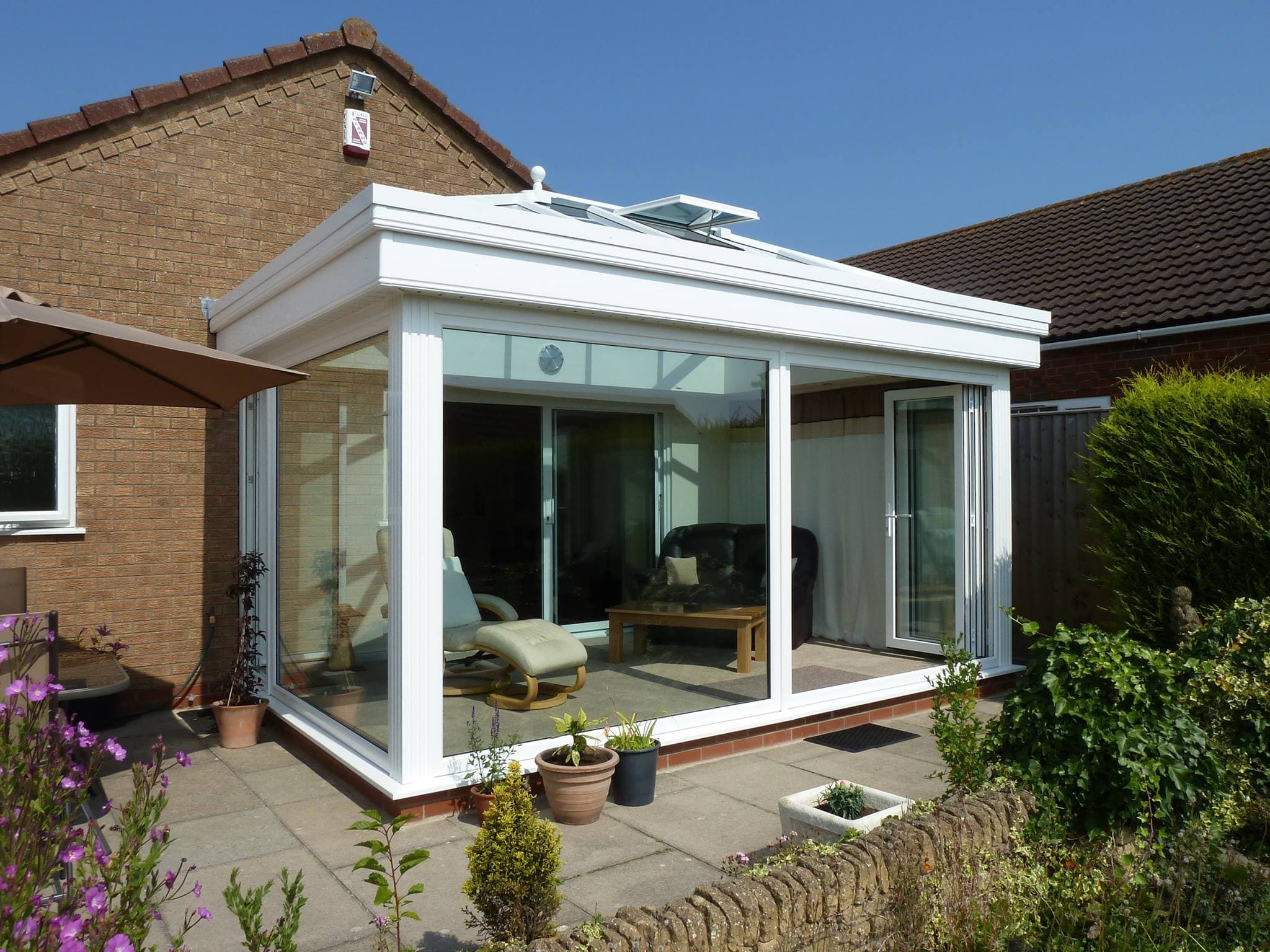
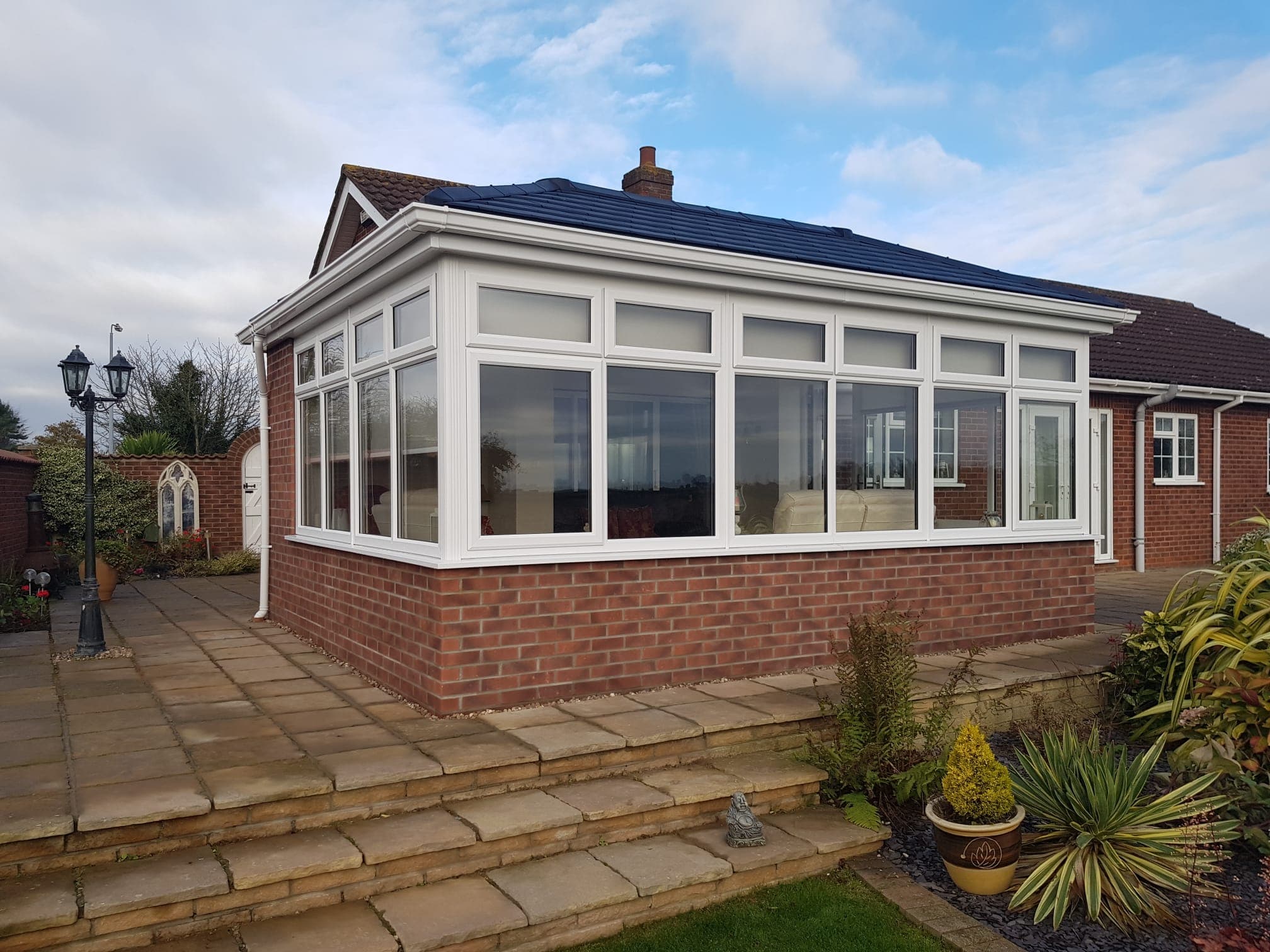
The real difference between the two is the proportion of solid wall to glass, and what the roof does. An orangery has a masonry perimeter, usually brick or render, with a flat roof running round the edge of the room and a glazed lantern set into the middle of it. A conservatory is mostly glazed, standing on a low brick base or running down to the floor, under a pitched or lean-to glazed roof. Almost everything people argue about in an orangery vs conservatory comparison follows from those two facts.
So choose an orangery if you want a room that reads as part of the house, holds its heat all year and gives you solid wall to put furniture and a radiator against. Choose a conservatory if light and the garden are the point, or if the budget is the tighter constraint. Both add a room without the cost of a full extension, and we build conservatories, orangeries and warm roofs across Skegness and the Lincolnshire coast.
The roof is what really separates a conservatory from an orangery
Strip the two back and the walls matter far less than people expect. The roof is the largest surface of a garden room, and it decides whether you sit in it in February and whether you can bear it in July.
In an orangery, most of that surface is insulated flat roof, with glass only where the lantern is. In a conservatory, most of it is glass. That is why an orangery behaves like a room of the house without anything further being specified, and why the roof glass on a conservatory is the decision with the biggest effect on how usable the room turns out to be.
It is also why the two are closer than they used to be. A conservatory with an insulated warm roof performs much nearer an orangery without the masonry, so if the only thing wrong with the one you already have is the time of year, that is a far smaller job than starting again.
The lantern to perimeter proportion is the decision people rush
Everyone arrives with a view on whether they want an orangery or a conservatory. Almost nobody arrives with a view on how big the lantern should be, which is the decision that shapes the room.
In our experience, a modest lantern in a generous perimeter works better than the largest lantern the roof will carry because the flat perimeter is where the lighting, the heating and any blinds have to live, and glass stretched out to the edges leaves nowhere to put them. A lantern that fills the roof looks wonderful on a drawing, and then the downlights have nowhere to go and the blind track has nothing to fix to.
Solid wall changes what the room can actually be
This is the point that settles it for a lot of people once they picture the room with furniture in it. An orangery gives you wall, at low level all the way round and often up to sill height. A conservatory gives you glass.
Wall is where a sofa backs on to something, where a bookcase stands, and where a radiator or a socket can go without a cable crossing glazing. We have found the first thing most customers do once a room is finished is work out where the sofa goes, and that conversation is very different in a room with two metres of brick in it.
Both still want a proper way through to the garden. Bifolding doors open around ninety per cent of the opening and stack to one side or split both ways, while French doors suit a narrower run and take less of the wall you have just gained.
Orangery vs conservatory through the year
A conservatory with a glazed roof, even a well specified one, is a brighter room than an orangery and a more seasonal one. Solar control glass makes a substantial difference in summer and a modest one in winter, and plenty of the glazed rooms on this coast are not used much between October and March.
An orangery is more even. The solid perimeter and the insulated roof hold heat far better, so it tends to be treated as part of the house rather than a room the door gets closed on for the winter. What you give up is brightness, and if you wanted the feeling of sitting outside under cover, an orangery is not it. From working with clients on this, a fair number arrive asking about an orangery and leave asking about a warm roof on the conservatory they have, because the problem was never the walls.
How each one sits against the house from outside
An orangery reads as masonry from the garden. The perimeter and the parapet hide most of the roof, so what you see is a low building with a lantern on it, which sits comfortably against a brick house and often looks as though it was always there.
A conservatory reads as glazing, and how well that works depends on the roof line it has to meet, which is more of a constraint here than inland. Many properties along this coast are bungalows and chalet bungalows with low eaves, and there is often not the height above the wall to carry a pitched or gable fronted roof without it looking forced, which is why a lean-to is often the design that ends up suiting a low eaves bungalow here. The conservatories gallery is worth ten minutes for that reason, because a roof meeting a house is something you recognise instantly in a photograph.
Where an orangery starts to compete with a full extension
An orangery costs more than a conservatory and less than a full extension for the same footprint, which is the comparison most people make, and it is not quite the right one.
The useful comparison is against the floor area you will genuinely use in December. A glazed room that stands empty for five months of the year is expensive floor space however little it cost to build, and a smaller orangery you live in all year can be better value than a larger conservatory you do not. If the budget only reaches a conservatory, build one and specify the roof glass properly rather than stretching to a poor orangery.
Building control looks at the two differently
Both can be caught, and how much depends on the structure rather than on the label. Whether a glazed room is treated as exempt or as an extension turns on things like its size, how it is separated from the house, whether it is heated off the house system and how much of it is glazed. An orangery has more solid roof and more masonry, so it is more likely to be looked at as an extension.
Converting the roof of a conservatory you already have is a separate question with rules of its own, and it is covered in conservatories on the Lincolnshire coast. Where the line falls on your property is settled by a survey and by your local authority rather than by anybody quoting you, and the base and where the water goes belong in the same conversation.
What we see on the ones we did not build
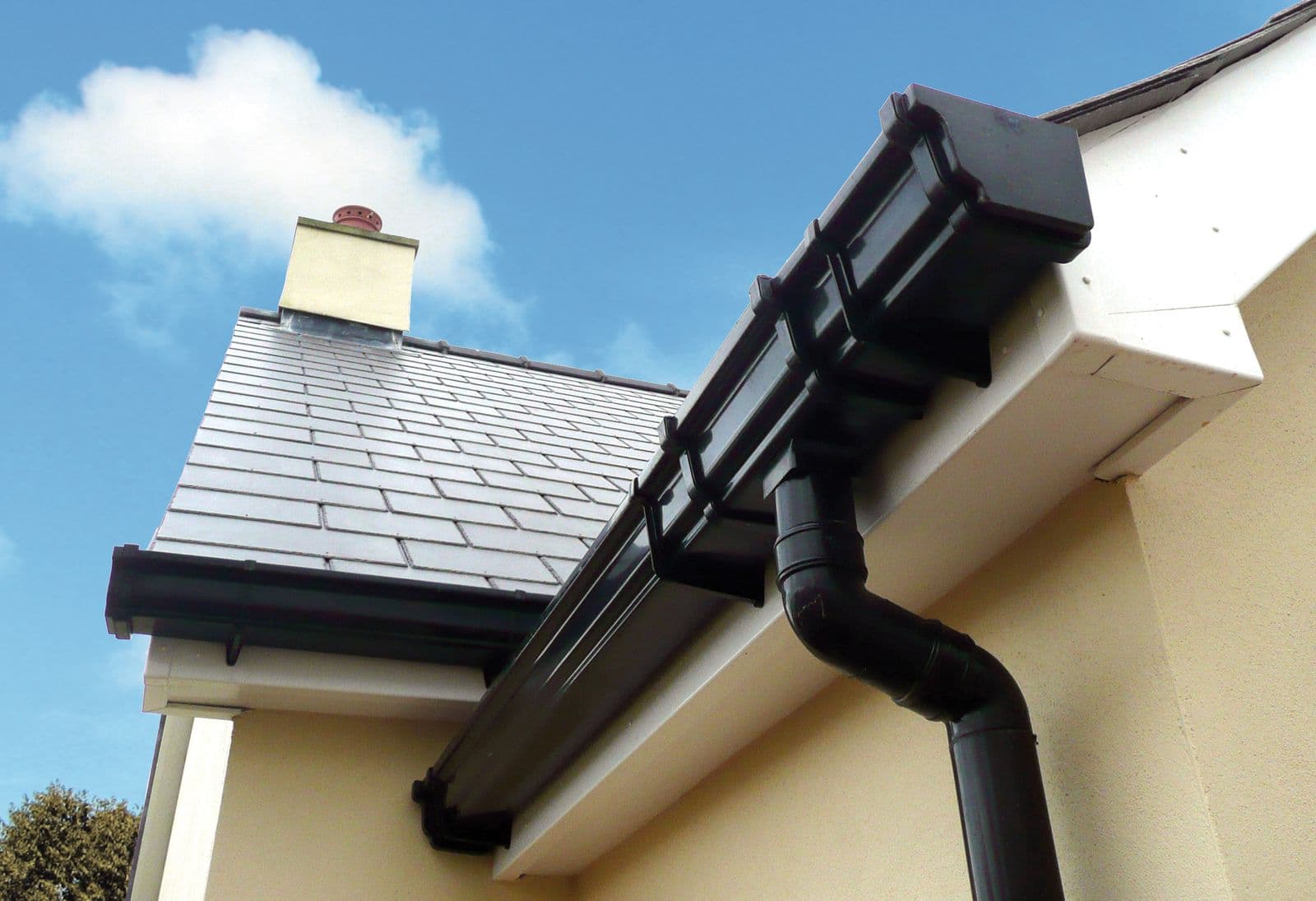
Because we are happy to repair anyone's work and not only our own, we get called to a lot of other companies' garden rooms, and the failures are consistent. It is almost never the walls. It is the roof, the junction where the structure meets the house, misted sealed units and guttering that cannot cope with what a large roof delivers in a downpour. Where a new roof ties into an existing run of fascias, soffits and guttering, that run has to be sound enough to take the extra, and putting all of that right is much of what our repairs service deals with.
From fitting along this coast since 1983, the other pattern is which elevation goes first, and it is almost always the seaward one. That is a real point in an orangery's favour that nobody puts in a brochure, because a masonry perimeter presents brick to that weather where a fully glazed room presents a sealed joint. Piper Windows has worked on properties here for over forty years and is now in its third generation.
The short version
An orangery means more masonry, a flat perimeter roof with a lantern, solid wall for furniture and a room you use all year. A conservatory means more glass, more light and a more seasonal room unless the roof is specified carefully or replaced later. Get the lantern proportion right rather than as large as possible, and judge the cost against the floor space you will actually use in winter.
If it would help to see the difference rather than read about it, the finishes and roof options are in the conservatories brochures, and we are at the showroom on Church Lane in Winthorpe Monday to Friday if you would rather call in. To talk it through against your own house, get a free no-obligation quote or ring us on 01754 898 998.
Thinking about new windows, doors or a conservatory? Request a free no obligation quote or call us on 01754 898 998.