Conservatories
Why is my conservatory roof leaking?
Published 3 November 2026 by Dawn Radford
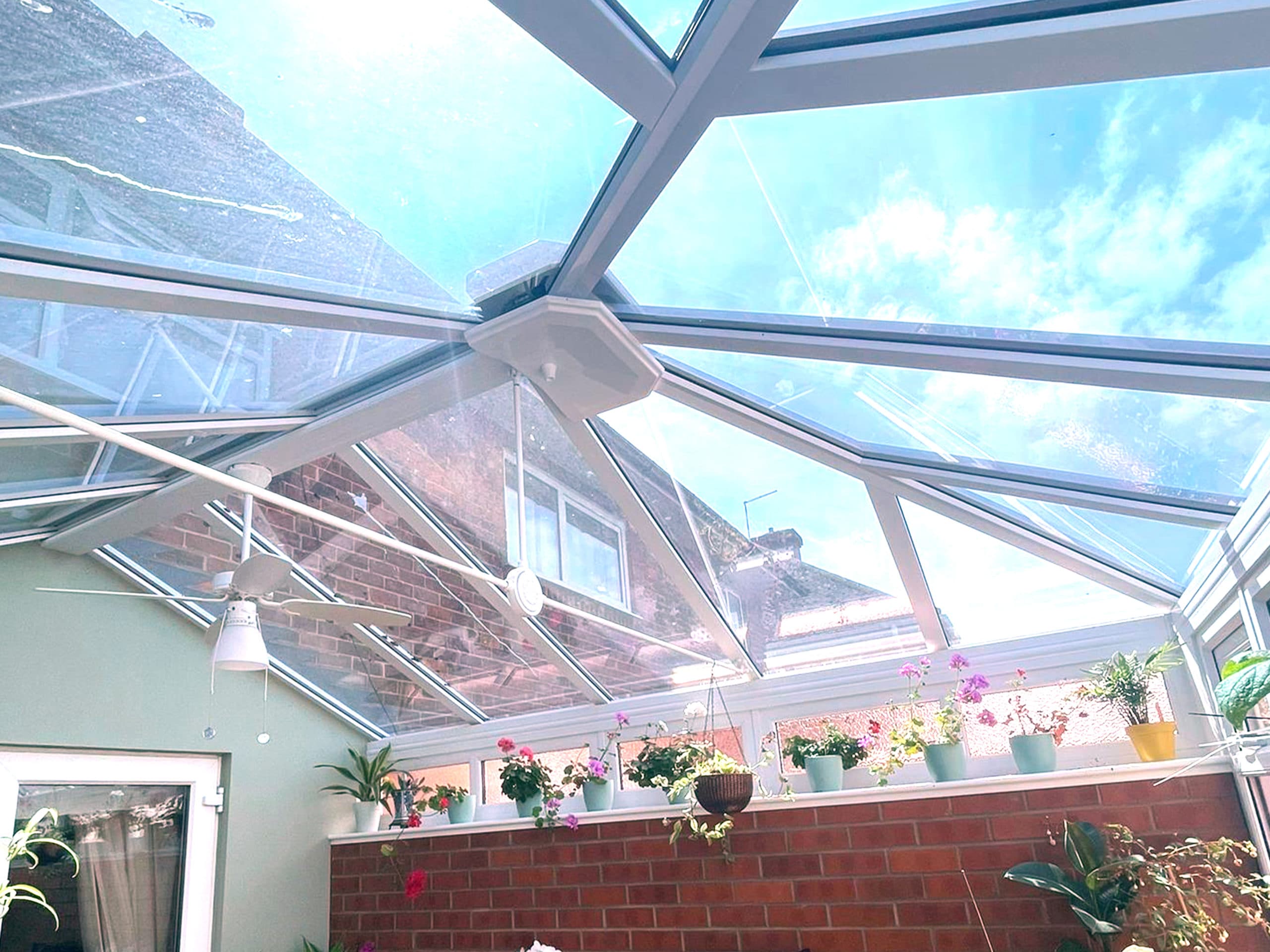
A conservatory roof that lets water in is usually failing in one of five places. It is the join where the roof meets the house wall, guttering that is blocked or overflowing, the seals along the glazing bars that hold each pane or sheet, the sheets themselves on a polycarbonate roof, or the frames, doors and base below the roof, where water low down gets blamed on the roof above it. Before any of those, it is worth ruling out a common false alarm, which is not a leak at all but condensation forming on the inside of the roof and dripping back down.
Most of those causes are repairs rather than a reason for a new roof. A cleared gutter, a resealed joint or a replaced seal costs far less than reroofing, and a roof that has genuinely reached the end of its life gives itself away in ways that are easy to recognise. The rest of this guide covers how to tell which you are dealing with, in roughly the order to check them.
Is it a leak or is it condensation
Start with when the water appears. A leak follows the weather. It shows up during or soon after rain, often in the same spot every time, and usually worse when the wind is coming from one particular direction. Condensation follows the temperature and the humidity in the room. It forms on the underside of the roof on cold nights and early mornings, especially after cooking, drying washing or a room full of people, and then runs down the glazing bars and drips, even when there has been no rain at all.
West Lindsey District Council's guide to condensation, damp and mould draws the same line for a whole house. Condensation comes from moisture produced inside the home, by cooking, washing and drying clothes indoors, meeting a colder surface. Damp that comes in from a defect outside is much more noticeable after rain and tends to leave a well defined patch. A glazed or polycarbonate roof is one of the coldest surfaces in a house on a winter night, which is why condensation so often shows there first.
The homeowner's maintenance guide from our supplier, which sits in our maintenance guides, makes the point that condensation on the inside is the more common kind, and that more ventilation, or a dehumidifier where it is excessive, is the answer to it. If the drips appear on dry, cold mornings and stop as the day warms up, that is very likely what you have, and the fix is air rather than a roofer. Keeping the trickle vents open helps, for the reasons covered in how to stop draughts around windows and doors.
Mist trapped between two panes of a glass roof is a third thing again. That is a sealed unit whose seal has failed, the glass unit needs replacing, and how to tell if your double glazing has failed explains how to be sure.
Where the roof meets the house wall
If it is genuinely rain, the join with the house is a good first place to look. Water running down the house wall is turned out over the conservatory roof by a flashing, and if that flashing has lifted, cracked or come away from the wall, or the pointing above it has gone soft, water gets behind it and into the room along the line of the wall.
The tell is water appearing along the back of the conservatory, at the top of the house wall inside, or running down the wall itself. On this coast, wind can drive rain sideways and upwards under a flashing that sheds ordinary rain perfectly well, and conservatories on the Lincolnshire coast goes into why that join is the one exposure tests hardest. Sometimes the water is not coming through the flashing at all but through the house wall above it, through cracked render or tired pointing, which no work on the roof will cure.
Blocked and overflowing gutters
A conservatory roof collects a lot of water and sends it all to one or two gutter runs. If the gutter is full of leaves, moss or wind-blown sand, the water backs up, and once it overflows on the inside edge it can find its way into the top of the frames below. That looks exactly like a roof leak from inside the room.
This is the cheapest cause on the list to fix. Our supplier's guide says to clear the gutter debris regularly so the roof drains properly, to wash the roof and frames with soapy water every few months, and to avoid abrasive cleaners and power washers. It also says to use ladders designed for conservatory cleaning so the roof is not damaged, and nobody should stand or kneel on the roof itself. If the gutters are sound and simply blocked, cleaning them may be the whole of the job. If they are cracked, sagging or leaking at the joints, that is a repair, and fascias, soffits and guttering are work we do as well.
The seals along the glazing bars
Each pane of glass or sheet of polycarbonate sits in a glazing bar and is held by seals and a cap along the top. Over years of sun, frost and movement those seals can shrink, harden or come away, and water that should run down the outside of the bar gets underneath it instead. A typical sign is a drip that comes from one particular glazing bar, often at the lower end where it meets the eaves, rather than from the wall or the gutter.
Seals and caps are replaceable parts. It is worth being cautious about a quick fix with a tube of silicone, though. A bead of sealant run along a joint that has not been diagnosed often moves the water rather than stopping it, and it makes the original seal harder to replace properly later.
Polycarbonate sheets that have cracked or moved
Polycarbonate roofs bring their own problems. Sheets can crack, they can slip down in their bars over time, and the tape that closes off the ends of the hollow flutes can perish. Once that happens the flutes fill with dirt and water, and the roof starts to look streaked from the inside, which warm roof against polycarbonate describes in detail.
A single cracked or slipped sheet is a repair. A roof where several sheets have yellowed, gone brittle and started to leak is a different conversation, because patching one sheet on a roof where the rest are about to follow is money spent twice. Replacing a polycarbonate roof is on our list of repairs, and at that point it is worth deciding whether to replace it like for like or change the roof altogether.
Water low down is usually not the roof
If the water is appearing at floor level, on the sills or around the doors rather than from above, look at the frames and the base before the roof. Frames have small drainage slots along the bottom that can block, the seals between the frames and the dwarf wall can fail, and door thresholds have drainage holes that need keeping clear. The supplier's guide recommends checking for blocked drainage paths at least once a year. Damp that rises at the foot of the dwarf wall is a different problem again, which points at the base and the damp proof course rather than at anything to do with rain.
When it is time for a new roof rather than another repair
Repairs make sense while the roof structure is sound and the problem is local. A new roof starts to make sense when the leaks keep moving, when several parts are failing at once, or when the roof was never comfortable to begin with, too hot in summer and too cold to sit in from October onwards.
That last point can be what decides it. If you are going to spend money on a roof anyway, a warm roof replaces the glass or polycarbonate with an insulated, tiled roof, and the system we fit has been tested and certified by Jhai Building Control Ltd. Replacing a translucent roof with a solid one is notifiable building work in most cases, and the existing frames and base have to be able to carry it, which is settled on a survey rather than from a photograph. Whether the conservatory needed permission in the first place is a separate question, covered in do you need planning permission for a conservatory.
Getting a leak looked at
If you have ruled out condensation and cleared the gutters and it is still leaking, we are happy to come and find where the water is getting in, whoever built the conservatory. Leaks from windows, doors and guttering and replacement polycarbonate roofs are all part of our repairs service, and we will tell you honestly whether it is a repair or whether the roof has had its day.
To arrange a visit, get a free no-obligation quote or ring Piper Windows on 01754 898 998. If you are weighing up a new roof or a new conservatory, the conservatory brochures and our conservatories gallery show what is possible.
Thinking about new windows, doors or a conservatory? Request a free no obligation quote or call us on 01754 898 998.