Doors
Composite vs steel front doors compared
Published 7 November 2026 by Steve Radford
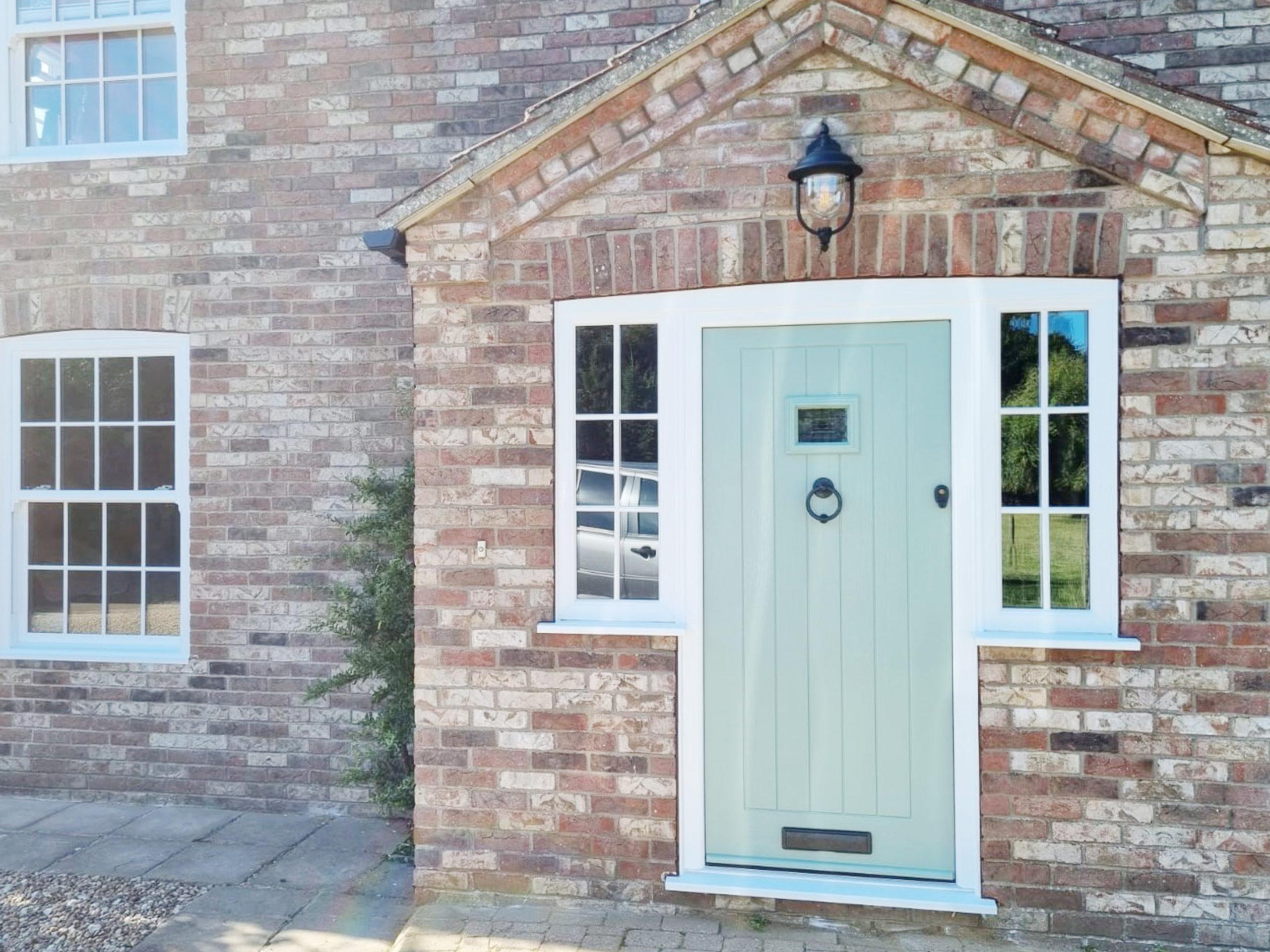
A composite front door and a steel front door are closer than most people expect. Both are a strong outer skin over an insulated core, both can be built and certified to the same police-backed security standard, and both can keep a hallway warm. The difference is the skin. A composite door has a moulded skin, usually with a woodgrain finish, that will not rust or dent easily. A steel door has a galvanised steel skin with a painted or coated finish, which is very strong but can dent under a hard knock and relies on that coating staying intact.
For most homes the deciding questions are how the door has to look, how exposed it is to weather and salt air, and whether the one you are quoted is certified as a complete doorset rather than just described as strong. We fit composite and PVCu front doors, not steel, so weigh what follows with that in mind. The rest of this guide goes through each difference in turn and the point at which neither door is the right answer.
What each door is actually made of
A composite door is built in layers. An insulating core sits inside a frame, and a tough moulded outer skin covers both faces. That skin is what gives composite doors their woodgrain texture and their colour, and it is the reason they are so often chosen to replace a timber door that needed repainting every few years.
A steel door uses the same basic idea with different materials. A core of insulation is sandwiched between two galvanised steel skins, which are then finished with a coating or paint. Steel is a very stiff, hard material, which is what people like about it, and the galvanising underneath the finish is what protects it from rust.
Neither is a solid slab of one material, and neither should be judged on that word "solid" in a brochure. What sits around the leaf matters just as much, which is where the security question really starts.
Security is about the whole doorset, not the material
It is easy to assume a steel door is automatically the more secure of the two. In practice the standard that matters treats them the same way. Secured by Design's guidance on doors, the police-backed security initiative, sets out that its standards are for complete doorsets, which it defines as the frame, the door leaf and the hardware together. A steel leaf in a weak frame with a cheap cylinder is not a secure door, and a composite door certified as a full doorset can be.
So the useful question for any quote is whether the doorset is certified, and to which standard, rather than what the skin is made of. The cylinder deserves its own question too. Our composite doors carry the Ultion 3 star cylinder, which is Secured by Design accredited, the police-backed standard, and built to resist cylinder snapping, a common way of attacking a front door lock. The most secure type of front door goes further into cylinders, locking points and the frame fixings that are easy to overlook.
Insulation, and how to compare it properly
Both types are insulated through the core, and a well made example of either will be a big improvement on an old timber door or a tired PVCu one. The honest answer to which is warmer is that it depends on the particular door, the glazing in it and how well it is fitted, not on the word composite or steel.
The way to compare them like for like is the energy rating. The BFRC, which runs the window and door energy rating scheme, rates doors as well as windows on a scale from A++ to E, taking account of heat loss, solar gain and air leakage. A genuine rated door carries a small official label on the inside of the frame. Our doors come A rated as standard, and asking for the rating of any door you are quoted is a far better guide than comparing descriptions of the core. Are A-rated windows worth it explains what the letters mean in practice.
How each one copes with salt air on this coast
Along this stretch of coast, salt in the air is hard on anything metal, and that is the difference between the two that matters most locally. A composite skin will not rust. A steel skin is protected by its galvanising and its finish, and it stays protected as long as that finish is intact. A deep scratch or a chip that goes right through to the metal is the place to watch, and it is worth touching in promptly rather than leaving it, more so within reach of salt air.
Composite doors still need some care by the sea. The maintenance guide our supplier publishes for its composite doors, which is in our maintenance guides, says a door within 25 miles of the coast may need cleaning more often to stop corrosive deposits building up, and that the door should always be closed with all its locking points fully engaged to keep it stable and properly aligned as the temperature changes. Both points apply to any front door here, and the hardware on either type is metal whatever the skin is made of. How coastal weather affects windows covers what salt, wind and sand do to hinges and locks over time.
Knocks, dents and everyday wear
A steel skin is very hard to break through, but under a sharp knock it can dent, and a dent in a steel skin does not spring back. A composite skin is less prone to that kind of mark. For a door that takes bikes, buggies and deliveries through it every day, that is worth thinking about, because a dent near the handle is something you would see every time you came home.
Neither type needs painting. The supplier's guide asks for nothing more than warm water and a clean microfibre cloth on a composite door, and is specific that it should never see a pressure washer, a steam cleaner, solvents, washing up liquid or household detergents, which is sound advice for any coated door.
How each one looks
This is where most people make the decision in the end. Composite doors are made in a wide range of styles, from cottage and planked designs to contemporary flush doors, and ours come in a large range of standard, premium and bespoke colours with a wood effect finish, which suits a cottage or a traditional frontage as well as a newer house. You can see some of them on real houses in our doors gallery, and choosing the right colour for your windows and doors helps with matching a door to the brick or render around it.
Steel doors tend to suit a crisper, more contemporary look, with smooth faces or pressed panels. If that is the look you are after and the door will be properly certified, a steel door is a perfectly reasonable choice, and we would rather you chose the right door than ours.
When you do not need a new door at all
A surprising number of front doors are replaced because they feel insecure or draughty, when the door itself is sound. A cylinder that can be snapped can be replaced with an anti-snap one, a door that has dropped can be adjusted so it locks and seals properly again, and a tired weather seal can be renewed. Security upgrades, barrel locks and door adjustments are all part of our repairs service, on doors we fitted and on doors we did not, and how to stop draughts around windows and doors explains how to tell a seal problem from a door that really has had its day.
If you are weighing composite against PVCu rather than steel, composite vs uPVC doors compares those two directly.
Which one should you choose
Choose a composite door if you want a traditional or woodgrain look, a skin that will not rust or dent easily, and a door that copes well with salt air without much attention. Choose a steel door if you want a sharper contemporary look and are happy to keep an eye on the finish. Either way, ask for the doorset certification, the cylinder rating and the energy rating, because those three tell you far more than the material does.
To see the composite range for yourself, get a free no-obligation quote and we will come and measure up, or call in at the Piper Windows showroom on Church Lane in Winthorpe. The composite door and PVCu door pages show what we fit, the styles are in the door brochures, and you can ring us on 01754 898 998.
Thinking about new windows, doors or a conservatory? Request a free no obligation quote or call us on 01754 898 998.