Garage doors
Garage door styles and which suits your home
Published 14 October 2026 by Steve Radford
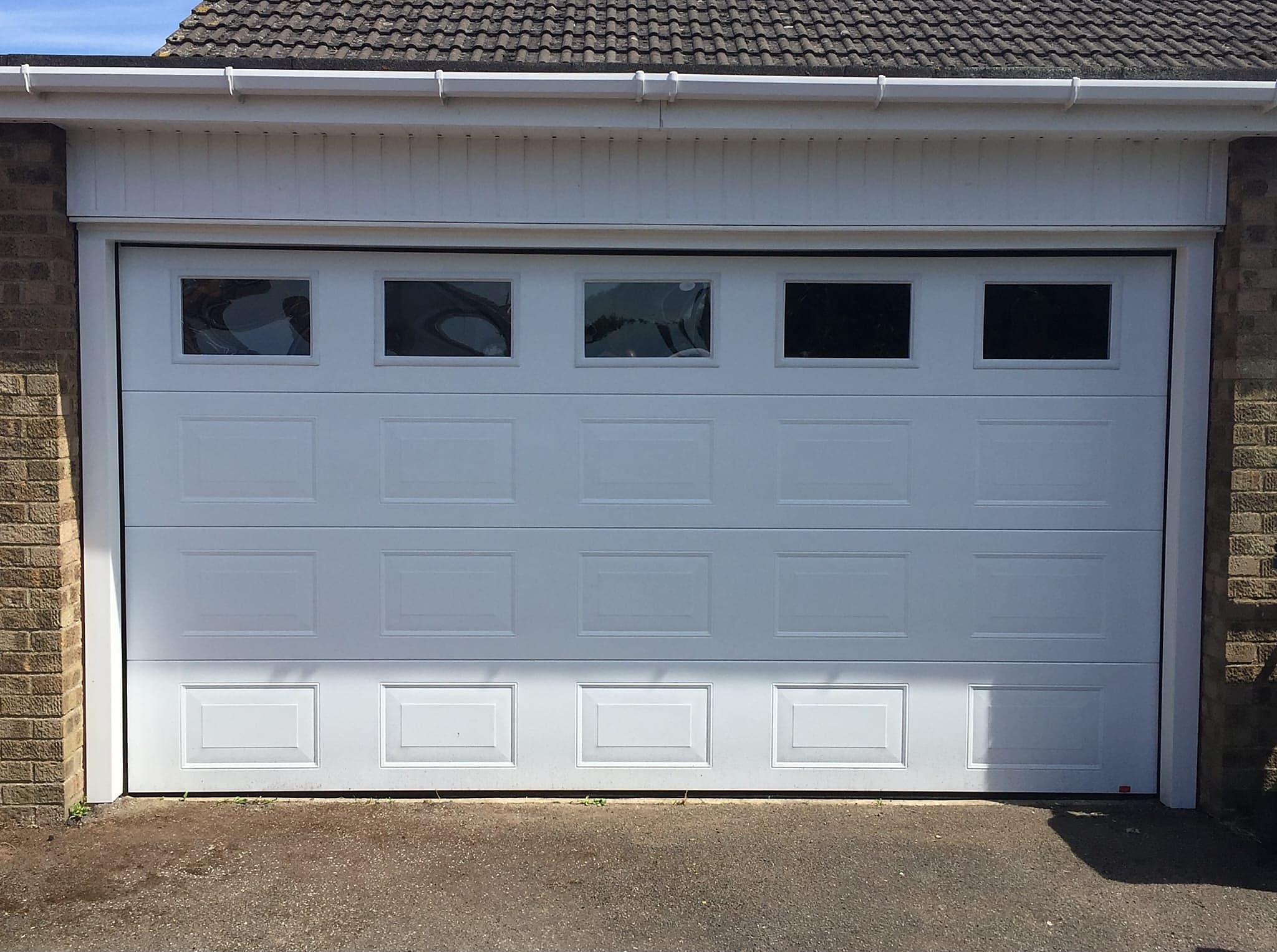
Garage door styles come down to two measurements and one question, and none of the three is about how the door looks. The measurements are how much clear ground there is on the drive in front of the opening, and how much room there is above and beside that opening inside. The question is what the garage is actually used for.
Broadly, an up and over door suits a garage with room on the drive for the leaf to swing through, and it is the most economical arrangement. A sectional suits a short drive or a car that parks tight to the door, because nothing travels out beyond the opening, and it seals better round all four edges. A roller also stays within the opening and asks almost nothing of the ceiling, because the curtain rolls into a hood above the door. Side hinged doors suit a garage somebody walks into far more often than they drive into. We supply and fit garage doors from Garador and Hörmann across this coast, and the rest of this is here so you can see where your own garage sits before you commit to anything.
The four garage door styles, and what each one actually is
An up and over door is one panel that swings out and up on a spring balanced frame, which is the traditional arrangement. A sectional door is horizontal panels that hinge as they rise and travel back along the ceiling, so nothing swings out beyond the opening and the door seals round all four edges.
A roller door is a curtain of slats rolling into a hood above the opening and running in guides down each side. Like a sectional it stays inside the line of the opening, but it takes its room from above the door rather than from the ceiling behind it. Side hinged doors are two leaves hinged at the jambs, the oldest of the four, and they still make sense on a garage used mostly on foot, because you open one leaf for the mower rather than lifting a whole door.
The drive in front of the door decides most of it
The ground in front of the opening catches people out more than anything else, because it is the one thing nobody measures. An up and over leaf travels out and up through an arc, and that arc sits on the drive immediately in front of the door. Where there is length to park behind it, none of this matters. Where there is not, the owner reverses out before they can open the door, for as long as they own the house.
That matters here more than in a lot of places. A large share of the properties along this coast are bungalows and chalet bungalows with the parking directly in front of the house on a drive one car long, which is exactly the layout where the arc and the parking space are the same piece of ground. Somebody who wants to carry on parking where they park now has usually settled the question without realising it.
On a short drive a sectional door is usually the better choice than an up and over, because the leaf on an up and over has to swing out through the space the car is parked in, and on a single car drive that space is the only space there is.
What is above and beside the opening inside
A sectional and a roller take their room from inside the garage instead, which is why the survey happens indoors as well as out. A sectional wants clear height above the opening for the panels to turn the corner and a clear run back along the ceiling for the tracks. A roller wants height above the opening for the hood, and clear reveals down both sides for the guides.
What gets in the way is rarely dramatic. A boiler on the side wall, a light fitting, a shelf somebody put up in 1994, a lintel sitting low over the opening. On a garage attached to a bungalow the ceiling is often the underside of the roof itself, which is the commonest reason a sectional will not go where the owner assumed. That is the case a roller answers, and it is worth raising at the survey rather than finding out on the day. An up and over asks the least of the inside of any of the four styles, so a full garage with a long drive is not a compromise, it is the right answer.
If the garage is doing a job other than parking a car
Plenty of garages here hold a freezer, a workbench and a set of bikes rather than a car, and that changes what matters, because once a garage is a room somebody uses the door stops being a lid and starts being a wall.
Sealing is where the arrangements genuinely differ. A door closing into a frame on all four edges keeps out wind driven rain and blown sand in a way a door dropping in front of an opening does not, and along this coast both arrive horizontally several times a winter. Insulation is worth raising in the same conversation, because a thin single skin door is a large surface and the space behind it follows the weather outside more closely than owners expect. Most of these arrangements can be automated, which is better settled at the start because it changes what gets ordered.
How the door reads against the rest of the frontage
A garage door is usually the largest single area of the front elevation, so it does more for the look of a property than its price suggests. It is also the part most likely to have been left alone for thirty years while everything around it was replaced, which is why a new one so often makes a frontage look finished.
The decision is whether to match the door to the windows and the front door or to let it deliberately recede. Matching it to anthracite windows gives the frontage one clear intention, while keeping it quieter than the front door leaves the entrance as the thing the eye goes to, which is usually right where the garage is wider than the porch. The judgements are the same ones as choosing the right colour for your windows and doors, including what salt air does to a dark finish.
What this coast does to the moving parts
A garage door is the largest moving part of most houses, and out here it is a large moving part standing in salt air. Springs, cables, tracks, hinges and the lock all corrode, and they corrode faster on the side of the house facing the sea. We have been fitting along this coast since 1983, and a garage door tends to show salt damage before the rest of the frontage, because it is the only part with springs and cables in it.
We repair window and door hardware whoever fitted it originally, and on any door that moves it is rarely the panel or the frame that gives up first. It is the moving parts and the fixings. That is the most useful thing to know when you compare two doors that look alike, because the difference between them usually sits in the hardware rather than in anything visible from the pavement, and how coastal weather affects windows sets out what the salt does to window and door hardware in detail.
When to leave the door exactly where it is
Here is the part somebody selling garage doors does not usually volunteer. A door that is stiff, noisy or slow is not necessarily a door that needs replacing, and what makes a door behave like that is generally the spring balance, the rollers and the guides rather than the door itself. So it is worth having the mechanism looked at before you price a replacement, because the fault is usually a serviceable part rather than the whole door. If the frame is sound and the panel is straight, a new door is a want rather than a need, and we would rather tell you that at the survey than sell you one.
It is worth ruling out too that the door is not the problem at all. If what irritates you is scraping frost off the windscreen every morning, a carport over the parking space deals with that without anybody touching the garage, and a freestanding one can stand in front of a garage whose door still has to open.
The short version
Measure the drive in front of the opening and look at what is above and beside it inside before you look at a single picture. A long drive and a full garage points to up and over. A short drive, a car parked tight, or a garage used as a room points to a door that stays within the opening. And on this coast, judge two doors on their hardware rather than their panels.
Piper Windows covers Skegness, Winthorpe, Ingoldmells, Chapel St Leonards and the wider Lincolnshire coast, every door measured to your opening rather than trimmed to fit, and the garage door brochures are worth a look first. If you would like somebody to come and measure up and say honestly which arrangements your garage will take, get a free no-obligation quote or ring us on 01754 898 998.
Thinking about new windows, doors or a conservatory? Request a free no obligation quote or call us on 01754 898 998.