Conservatories
Orangery or extension, which is right for your home?
Published 19 November 2026 by Dawn Radford
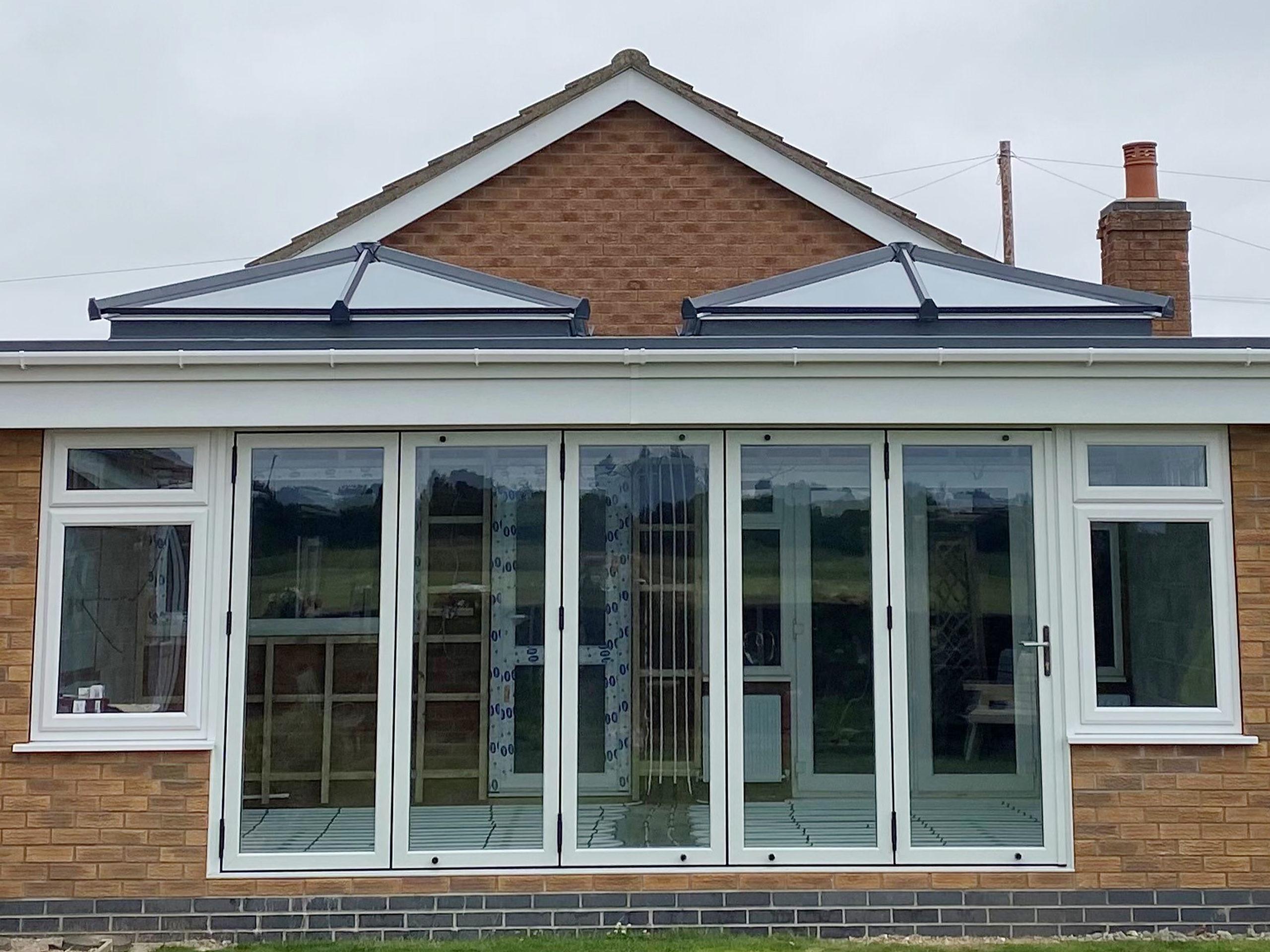
An orangery sits between a conservatory and a full extension. It has a solid brick or rendered perimeter and a flat roof around the edge like an extension, with a glazed roof lantern in the middle that brings daylight down into the centre of the room. A single storey extension is a fully built room with solid walls and a solid roof, finished inside like the rest of the house. If you want a light, garden-facing room for sitting, dining or entertaining, an orangery can give you that, and it could be the more affordable way to gain the space. If you need a room that has to work like any other in the house, such as a kitchen with full services, a bedroom, or anything with a second storey above it, an extension is the right answer.
We build orangeries, so this is written from that side of the fence. The rest of this guide goes through the practical differences, the planning and building regulations position, and the cases where we would point you towards a builder rather than an orangery.
What actually makes a room an orangery
The defining feature is the lantern. A raised glazed roof set into a flat roof, with solid perimeter around it, gives a room light from above without making the whole roof glass. How big the lantern is relative to the perimeter is the proportion that matters most, because it decides whether the room feels like a bright garden room or an extension with a skylight.
The walls are usually brick to match the house, rendered, or a mix of the two, with large glazed doors and windows between brick piers. That is why an orangery reads as part of the house from outside rather than as a glass box attached to it. Orangery vs conservatory covers how it differs from a conservatory, if that is the other option you are weighing.
Light, and how the room feels
This is where the two differ most. An extension's light comes from its windows and doors, and perhaps a roof window or two, so the middle of a deep extension can be the darkest part of the room. An orangery's lantern puts light right where an extension tends to be darkest, and with bifolding or French doors along the garden side it opens the room to the garden in a way a solid extension rarely does.
The other side of that is privacy and wall space. An extension gives you more solid wall for kitchen units, shelving, a television or a sofa against the wall, and a lantern overhead is not what everybody wants in a room they use in the evenings. Think about what the room is for and where the furniture will go before deciding which of those matters more.
Warmth through the year
An orangery is far better insulated than a fully glazed conservatory, because most of its walls and roof are solid. That makes it a room you can use through the winter rather than shutting off from October. A well built extension is more insulated again, since every part of it is solid and insulated to the standards for a new extension.
If you already have a conservatory that is too cold in winter and too hot in summer, neither an orangery nor an extension may be needed. Replacing its roof with an insulated one can be the change that makes it usable all year, and warm roof vs polycarbonate conservatory roofs explains what that involves. The warm roof system we fit has been tested and certified by Jhai Building Control Ltd, an accredited national building control approvals agency.
Planning permission for each
For planning purposes there is no real difference. An orangery is an extension in planning law, and both fall under the same permitted development limits on depth, height, position and how much of the garden is built on. The Planning Portal's guidance on extensions sets those out, and do you need planning permission for a conservatory goes through the same limits in plain terms, along with the properties where the answer changes, such as listed buildings and conservation areas.
Building regulations for each
Here the two are much closer than people expect. A conservatory can be exempt from building regulations if it meets certain conditions, but an orangery's solid walls and roof are likely to take it outside that exemption. The Planning Portal's guidance on extensions and building regulations says that most extensions require approval under the building regulations, covering doors and windows, drainage, electrics, walls and the roof among other things. An orangery should be treated the same way, and where the line falls on a particular design is settled with building control.
The same guidance notes that on a semi-detached or terraced house you will need to tell the neighbours under the Party Wall Act. The government's guidance on party walls explains that notice is needed for new building on or at the boundary, work to an existing party wall, and digging near and below the level of a neighbouring building's foundations. It applies to an orangery and an extension alike.
The size of the job
An extension is a full building project. It needs foundations, walls, a roof structure, plastering and decorating, and usually an architect or designer to draw it and a builder to build it. An orangery still needs proper foundations and a properly built base, and its roof, windows and doors are made to measure for the house. Our own description of an orangery is that it could provide a more affordable solution to a lack of space, and that it makes a versatile and stylish entertaining space.
When an extension is the right answer
We would rather say this plainly than sell an orangery that does not fit. An extension is the better choice if you need a kitchen with full plumbing and appliances across most of the walls, a bedroom or bathroom, a room that will have another storey built over it later, or a room that needs privacy from neighbouring windows more than it needs light from above. It is also the better choice where the plan simply needs more solid wall than an orangery can give.
If that is where you land, a builder or an architect is the right first call. The windows and doors for it are something we can quote for once the design is settled.
Which one should you choose
Choose an orangery if you want a bright room that opens to the garden, will be used for sitting, dining or entertaining, and should feel part of the house from outside. Choose an extension if the room has to work like any other room in the house, with full services, solid walls all round or another storey above. And if you already have a cold conservatory, look at a warm roof before either.
You can see orangeries and conservatories we have built in our conservatories gallery, read about the orangeries we build, and look through the conservatory brochures. To talk through an orangery for your own house, get a free no-obligation quote and we will come out, measure up and look at the house and the garden, call in at the Piper Windows showroom on Church Lane in Winthorpe, or ring us on 01754 898 998.
Thinking about new windows, doors or a conservatory? Request a free no obligation quote or call us on 01754 898 998.